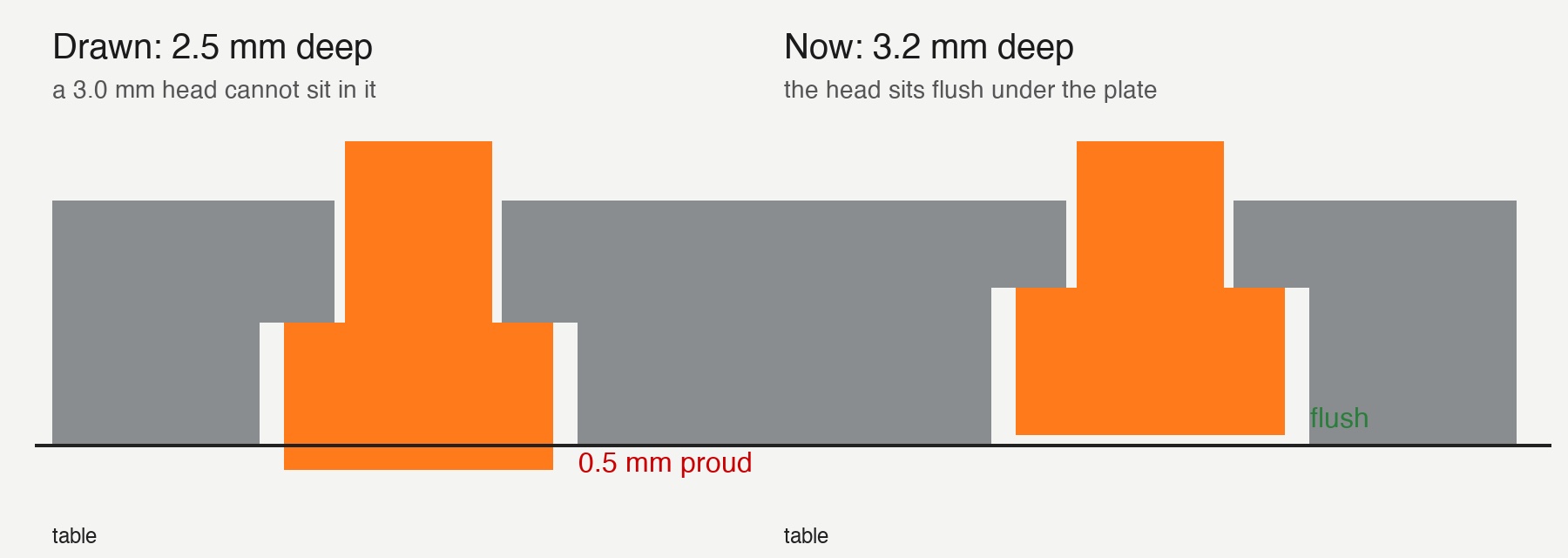
The grid base for the pod was already printing when I found the counterbores were 0.5 mm too shallow. I had drawn them 2.5 mm deep. The socket-cap heads in my kit are 3.0 mm tall, so every screw under the plate would have sat proud. The plate was a long print, and nothing in the model had been able to tell me.
That was the problem with how I'd been working: I checked parts against each other for overlaps, and I never checked the screws. A screw is a hole in one part, a thread or a nut in another, a head that needs somewhere to sit, and a path for a screwdriver. Any of those can be wrong while every overlap check passes. So I wrote fastener_audit.py, which takes every screw in the assembled model and asks the same questions of each one:
- Does it reach a nut, or a pilot deep enough to bite?
- Does it leave plastic past a self-tapper's tip?
- Is there a hole where the screw goes through?
- Does the head have a counterbore, or material under it to seat on?
- Can a screwdriver get in from outside?
Parts that go in later are left out on purpose. The cap isn't there yet when you tighten the screws under it, and the audit knows the order.
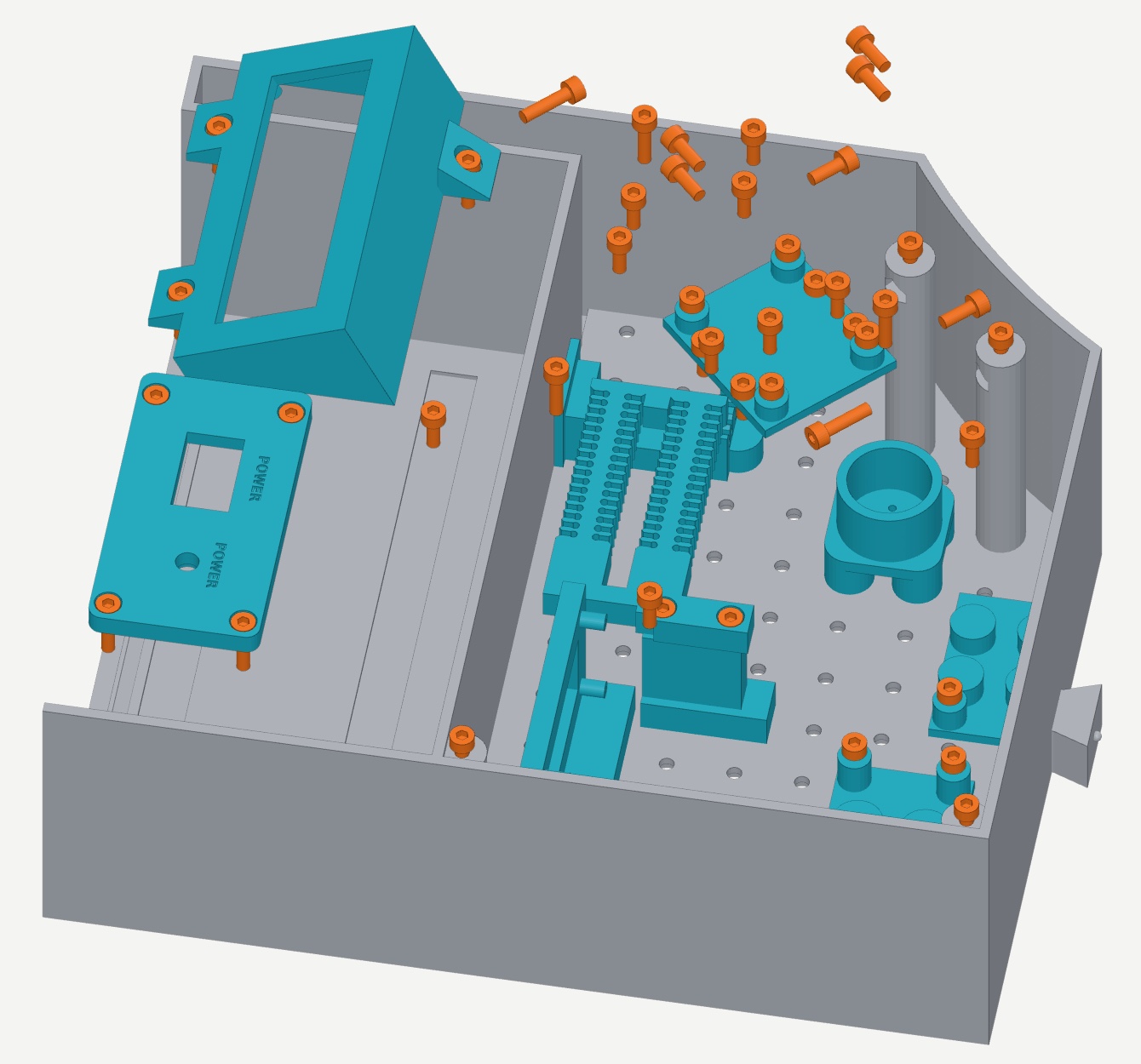
The first run listed 77 screws and 24 failures, which was humbling for about ten minutes. Almost all of them were the audit being wrong: a head that seats on a washer rather than plastic, the console's switch carriers missing from the 3D scene altogether. I fixed those one by one, and the real faults showed through. One was real: the access panel's M3 by 8 screw ended flush with the back of its wall strips, with nothing behind it to bite. I thickened the strips from 3 to 5 mm, and the pilot now leaves 1 mm.
Another real find came later with the PD wire shelf. Its lugs were 6.5 mm tall and the screw's tip left 0.1 mm of plastic, which would have split on the first tightening. They are 7.5 now.
The audit has grown with the model: 96 screws, no failures, a handful of warnings I've decided to live with. Fourteen pilots are blind and leave a 1.0 mm floor on purpose. Eleven are bring-up pilots drawn at 3.0 mm, which only works because my printers print holes undersize.
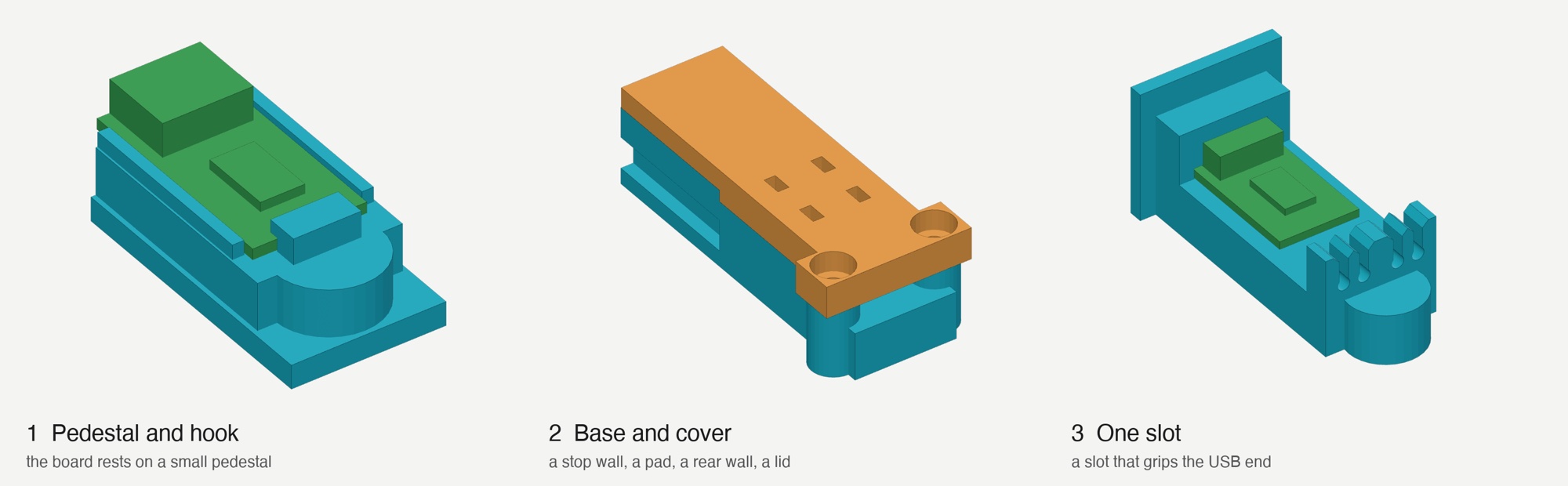
What it doesn't check matters as much. Horn screws are not in it, so the M2 screws that popped on the boom horn are still on my own list. The ESP32 mount's four board screws aren't either, and neither are glued joints or the clamp's pins. A clean report means the screws it knows about are right. It says nothing about the ones nobody told it about, and the counterbores were exactly that kind of mistake.
Comments (0)