★ FEATURED
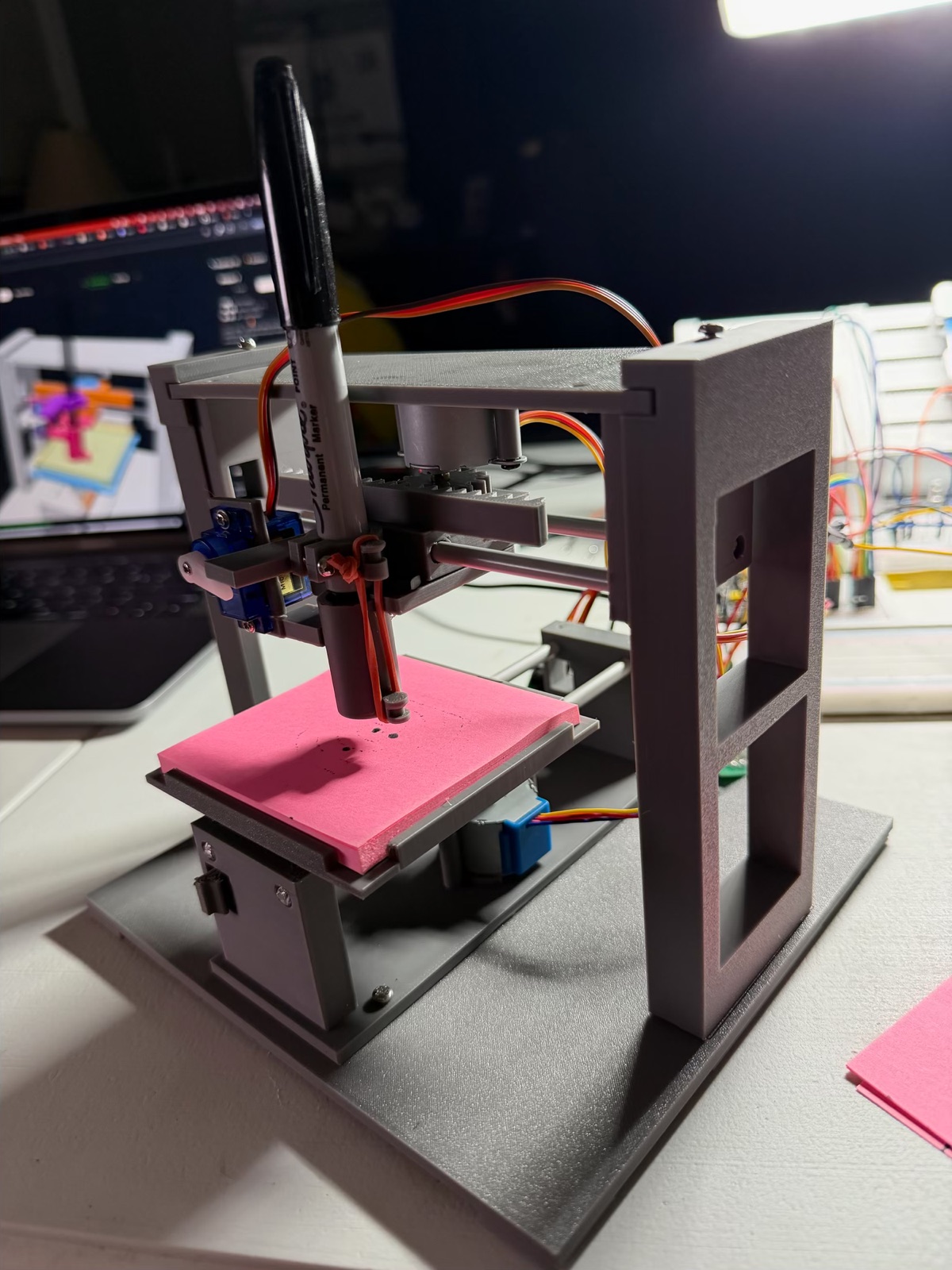
The pen plotter draws its first picture
The pen plotter is built, wired and drawing. Its first picture is a "hypnotic H" for Hypnochip: the H's outline in five rings 1.3 mm apart, one continuous line, about 100 seconds.
Build logs and notes from the bench.
The pen plotter is built, wired and drawing. Its first picture is a "hypnotic H" for Hypnochip: the H's outline in five rings 1.3 mm apart, one continuous line, about 100 seconds.
The pen plotter is built, wired and drawing. Its first picture is a "hypnotic H" for Hypnochip: the H's outline in five rings 1.3 mm apart, one continuous line, about 100 seconds.
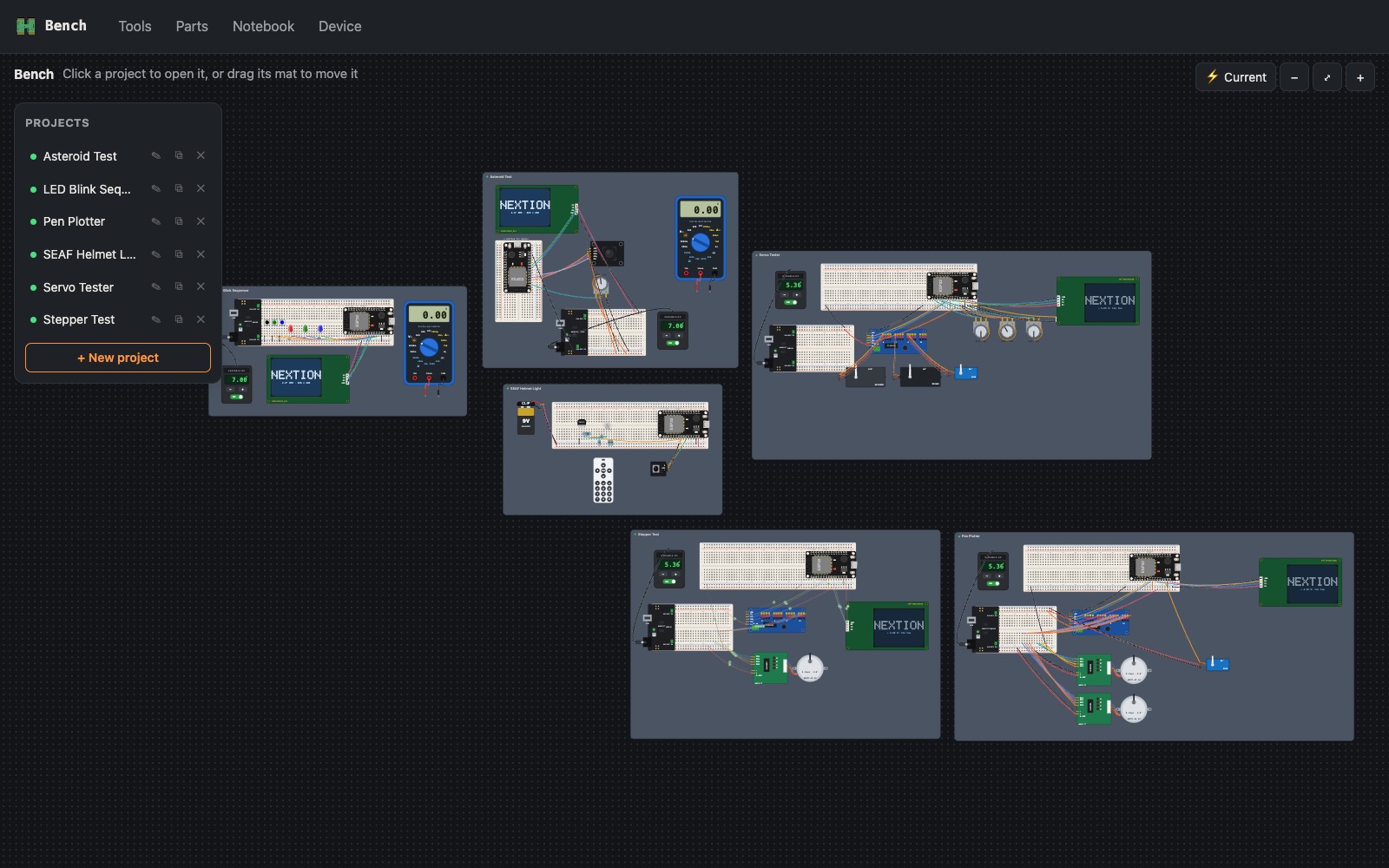
In a week, Bench has grown from an Ohm's law calculator into the place where every project lives twice: on a canvas that simulates the circuit, and on the desk where I build it for real.
A 28BYJ-48 stepper turns cleanly up to 18 RPM, driven by the ESP32 through the PCA9685 servo driver and a ULN2003 board. This is milestone 1 of the pen plotter.
An SG90 on channel 8 of the PCA9685 servo driver sweeps all the way (600 → 2400 → 1500 µs) when the ESP32 tells it to.
The SEAF helmet light works on the real bench. A 9 V battery powers an ESP32 and an RGB LED (all three colours on, so it looks white).
The Asteroid Test now has a working zoom knob: a B10K panel pot in the rig that zooms the view 1× / 2× / 4× around the digger.
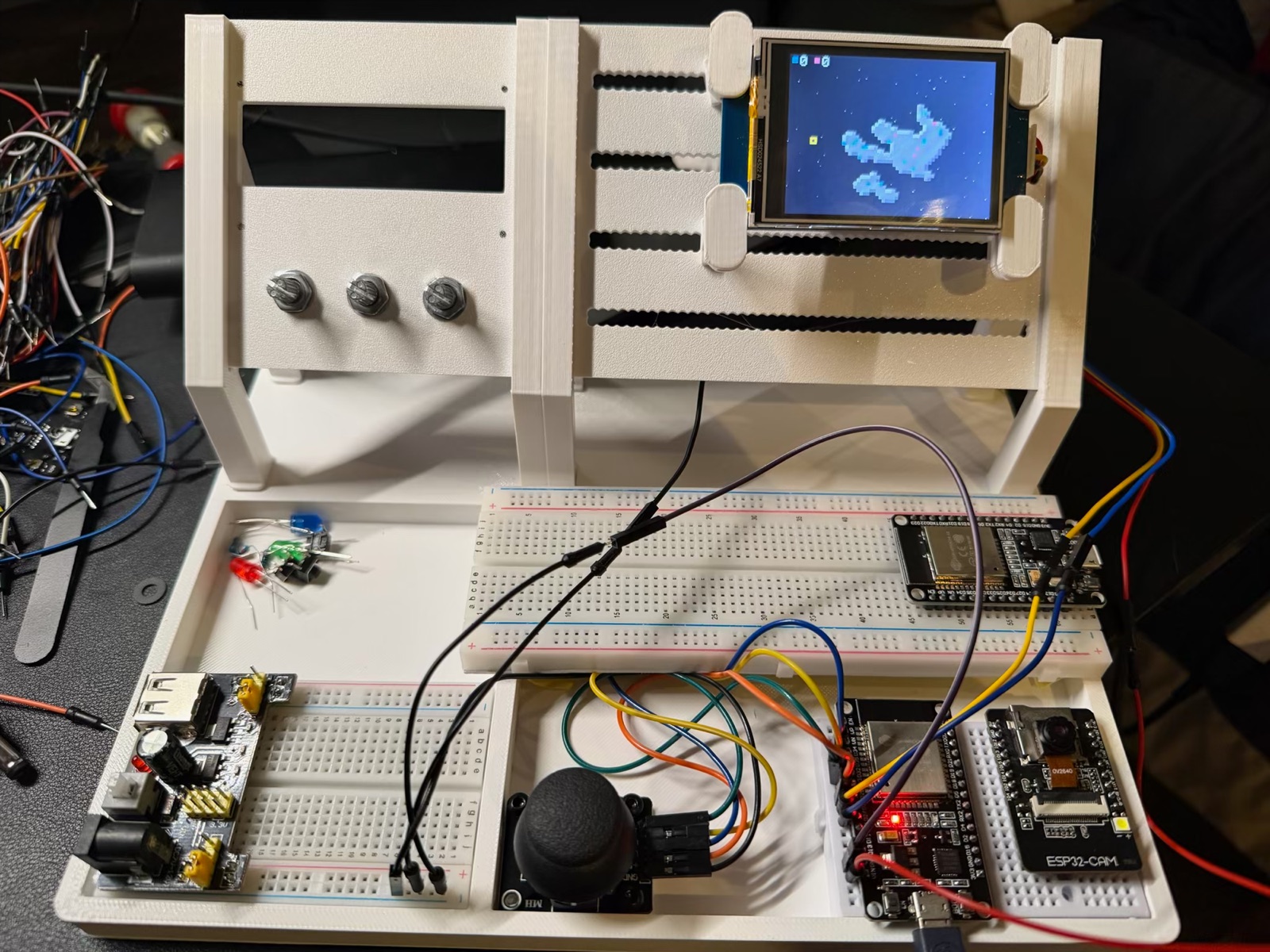
I designed and 3D-printed an electronics studio rig, and both projects now live in it. The base holds the breadboards, the boards and the wiring.
A second ESP32, straight out of the package (still running Espressif's 2017 factory firmware), now runs Asteroid Test: a Spacecavator-style asteroid on the Nextion, and a little yellow digger I steer…
My Nextion 2.4" display (NX3224T024_011) is lit and cycling red → green → blue in step with the three LEDs, driven by the ESP32. The Bench canvas mirrors the LEDs and the screen at the same time.
Three LEDs driven straight from ESP32 pins, and why the current needs a wire back to GND.